Projects

Selected projects.

Open-source bioinformatics tools, industry ML systems, and research collaborations — with the context behind each one.

Abstract illustration of fluorescent bead arrays
Stack
Python · NumPy · scikit-learn · YAML configs
Output
Decoded bead-to-barcode tables ready for downstream spatial analysis
License
GPL-3.0

2020 — 2022 · Lead author · PhD project

Optocoder

Reading barcodes off a microscope.

Optical sequencing platforms like Slide-Seq record where each transcript came from by imaging a slide of millions of barcoded beads over many cycles. Recovering the barcodes from those images is harder than it sounds: fluorescence bleeds between channels, phasing drifts, and beads light up unevenly.

Optocoder is a Python pipeline for the whole decoding step — aligning cycles, calling bases, correcting phasing and prephasing, and training a small ML model against Illumina ground truth where it exists. It was built around the Rajewsky Lab's wet-lab setup and published in NAR Bioinformatics.

  • Spatial transcriptomics
  • Imaging
  • Machine learning
  • Open source
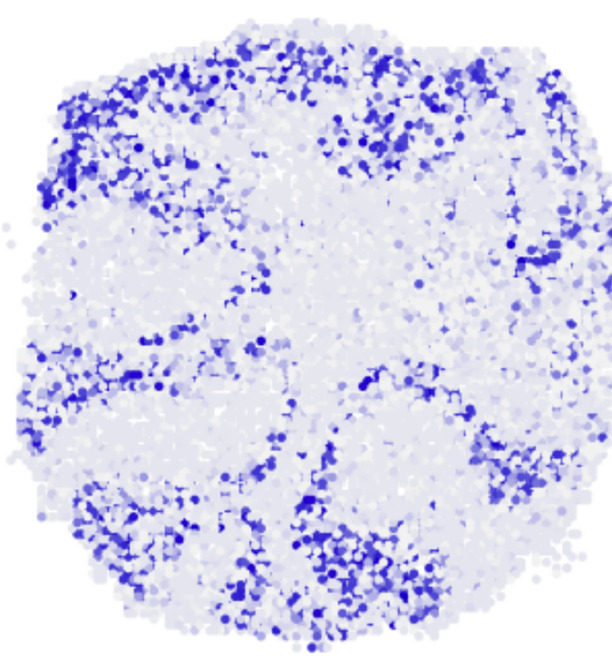
novoSpaRc spatial reconstruction visualization
Method
Optimal transport over expression + reference manifolds
Stack
Python · Jupyter · POT · scanpy-compatible
Companion paper
Gene Expression Cartography, Nature (2019)

2020 — 2021 · Co-first author

novoSpaRc

Putting cells back where they came from.

Single-cell RNA-seq tells you what each cell is doing, but dissociation destroys the information about where it sat in the tissue. novoSpaRc reconstructs that spatial structure de novo, using optimal transport to find the arrangement of cells that best explains their expression similarity plus whatever partial spatial reference is available.

I co-led the 2021 Nature Protocols release, which focused on scalability — making the algorithm tractable on larger tissues and higher-resolution maps — and on a tutorial-driven API. The library has a steady user base (133★, 42 forks) and shows up in spatial-omics course material.

  • Spatial reconstruction
  • Optimal transport
  • Open source
Abstract protein chain with attention pattern
Models
ProtBERT (HuggingFace) + custom classification heads
Inputs
Raw amino-acid sequences from environmental samples
Goal
Shortlist candidates for wet-lab validation

Feb 2023 — Apr 2023 · Visiting scientist, Hebrew University of Jerusalem

ProtBERT for anti-insecticidals

Protein language models meet agricultural biology.

During a research visit at the Hebrew University of Jerusalem, I built a pipeline that uses a pre-trained protein language model (ProtBERT) to find candidate anti-insecticidal proteins directly from raw sequence data.

Most of the work went into the integration rather than the model: combining transformer embeddings with biological domain knowledge so the predictions could be read and prioritised by biologists instead of coming out as a black-box ranking.

  • LLMs
  • Proteomics
  • AgBio
  • Research visit
Abstract particles in suspension
Stack
Python · PyTorch · TensorFlow · classical CV preprocessing
Domain
Cell therapy QC / particulate analysis
Paper
Grabarek, Senel et al., Cytotherapy (2021)

Apr 2019 — Sep 2019 · ML Research Student, Coriolis Pharma

Flow-imaging deep learning

Counting what shouldn't be there.

Cell-based medicinal products have to be screened for particulate impurities. Flow imaging microscopy produces thousands of particle images per sample — too many to review by hand, and too varied for classical thresholding.

At Coriolis Pharma I built the deep-learning system for it: ingestion, training, evaluation, and a Python package around PyTorch/TensorFlow so scientists could retrain and audit the models themselves. The work was published in Cytotherapy with collaborators at Leiden University.

  • Computer vision
  • Pharma QC
  • Deep learning
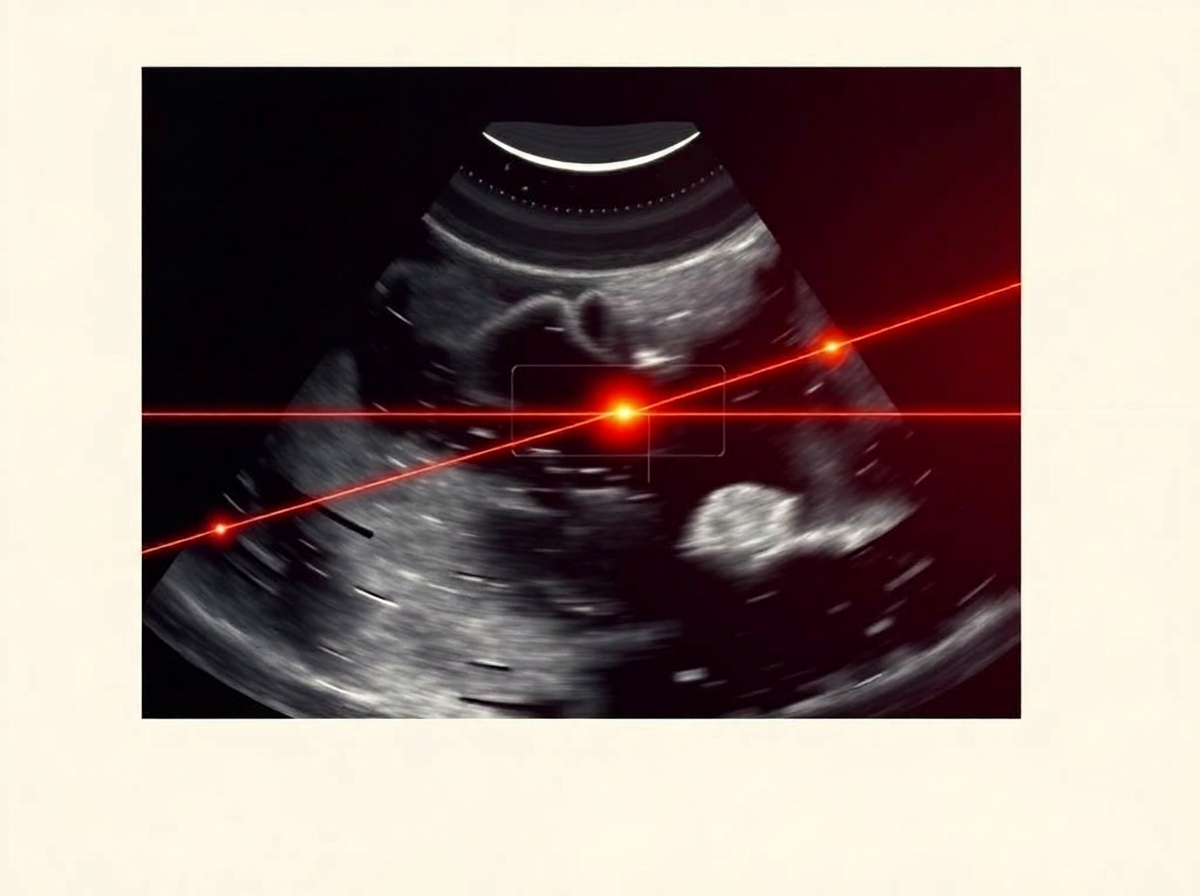
Abstract ultrasound texture with trajectory line
Stack
C++ · CUDA · OpenCV
Application
Image-guided biopsy robotics
Publications
ICRA × 2, ICAR, Mechatronics, TJEECS

2014 — 2016 · Undergraduate researcher, Ozyegin Robotics Lab

Ultrasound needle tracking

Robotic biopsy, in real time.

My first research work was real-time needle-tip localisation for an autonomous robotic biopsy system. The robot worked off a live ultrasound stream; my algorithms tracked the needle in that stream so the controller could keep it on target.

I wrote the C++/CUDA interface used during testing, did the Gabor-filter work for needle detection in 2D ultrasound, and contributed to five papers (ICRA 2016, ICRA 2017, ICAR 2015, Mechatronics 2019, and a 2020 TJEECS paper on curved-needle localisation).

  • Medical robotics
  • Computer vision
  • Real-time systems
Abstract single-cell clustering visualization
Modalities
scRNA-seq · CITE-seq · clinical metadata
Pipelines
Python · Nextflow · scanpy/scvi-tools
Status
Manuscript under revision — Blood Cancer Discovery

2024 — 2025 · Data Scientist → Senior Scientist, J&J Innovative Medicine

CARTITUDE-1 biomarker analysis

Single-cell signals behind a CAR-T response.

CARTITUDE-1 is the phase 1b/2 study of ciltacabtagene autoleucel (cilta-cel) in relapsed/refractory multiple myeloma. I contributed to the biomarker work — integrating single-cell transcriptomic, proteomic, and clinical readouts to understand which patients respond and why.

The collaboration spans clinical, translational, and manufacturing teams; the manuscript is currently under revision at Blood Cancer Discovery.

  • Single-cell
  • Multi-omics
  • Cell therapy
  • Clinical